
Prednisolone Acetate (Ophthalmic)
Rx Only
Generic NamePrednisolone Acetate
Therapeutic ClassCorticosteroid
Common Dose1–2 drops in affected eye(s) 2–4 times daily
Max / 24hAs per ophthalmologist guidance
PregnancyCategory C
Indications ▼
Inflammatory ocular conditions (e.g., uveitis, conjunctivitis)
Postoperative ocular inflammation
Allergic eye diseases causing significant inflammation
Mechanism & Pharmacokinetics ▼
Mechanism: Binds to glucocorticoid receptors in ocular tissues, reducing inflammatory mediator production and immune response.
Pharmacokinetics: Minimal systemic absorption; primarily acts locally on ocular tissues; metabolized in cornea and aqueous humor; excreted via tear fluid and drainage.
Dosage & Administration ▼
| Patient Category | Recommended Dose | Max / 24h |
|---|---|---|
| Adults | 1–2 drops in affected eye(s) 2–4 times daily | Follow ophthalmologist guidance |
| Elderly | Same as adults; monitor for intraocular pressure changes | Follow ophthalmologist guidance |
| Children | 1 drop in affected eye(s) 2–3 times daily; adjust per specialist | Follow ophthalmologist guidance |
Note: Shake well before use. Avoid contact with tip of the dropper. Taper per ophthalmologist instructions for prolonged therapy.
Side Effects ▼
Ocular irritation, burning, or stinging
Increased intraocular pressure, risk of glaucoma
Cataract formation with long-term use
Secondary ocular infections
Contraindications ▼
Viral, bacterial, or fungal ocular infections (unless concurrently treated)
Hypersensitivity to prednisolone or other corticosteroids
Caution in patients with glaucoma or ocular hypertension
Drug Interaction ▼
Concurrent ocular NSAIDs may increase irritation
Systemic CYP3A4 inhibitors/inducers may slightly alter systemic levels if absorbed
Other ocular medications may require staggered administration
Pregnancy & Lactation ▼
Use only if benefits outweigh risks; systemic exposure is minimal
Excreted in breast milk in very small amounts; generally considered compatible
Clinical / Research Summary ▼
Effective in controlling ocular inflammation and reducing postoperative complications
Rapid symptom relief in uveitis, conjunctivitis, and allergic eye disease
Well-documented in ophthalmology clinical trials and guidelines
Patient Counseling Points ▼
Wash hands before administration; avoid touching dropper tip to eye
Use exactly as prescribed; do not stop abruptly if using long-term
Report vision changes, eye pain, or signs of infection immediately
Storage & Handling ▼
Store at 20–25°C (68–77°F)
Protect from light; keep tightly closed
Keep out of reach of children
Brand Names (Bangladesh & Global) ▼
Bangladesh:
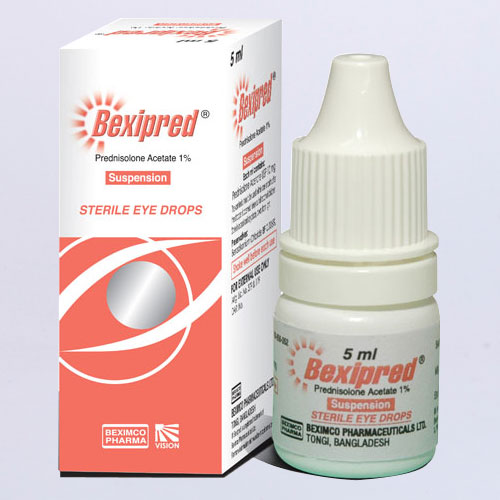 Bexipred® 1% Eye Drops
 Biocort® 1% Eye Drops
Cortan® 1% Eye Drops
Cortisol® 1% Eye Drops
Edisolone® 1% Eye Drops
Isolon® 1% Eye Drops
Ocusol® 1% Eye Drops
Pednisol® 1% Eye Drops
Precodil® 1% Eye Drops
Pred® 1% Eye Drops
Predflam® 1% Eye Drops
Prednol® 1% Eye Drops
Renisol® 1% Eye Drops
Sterolon® 1% Eye Drops
Global:
Biocort® 1% Eye Drops
Cortan® 1% Eye Drops
Cortisol® 1% Eye Drops
Edisolone® 1% Eye Drops
Isolon® 1% Eye Drops
Ocusol® 1% Eye Drops
Pednisol® 1% Eye Drops
Precodil® 1% Eye Drops
Pred® 1% Eye Drops
Predflam® 1% Eye Drops
Prednol® 1% Eye Drops
Renisol® 1% Eye Drops
Sterolon® 1% Eye Drops
Global:
Bexipred® 1% Eye Drops
Medical Disclaimer: This information is for educational purposes only. Consult a healthcare provider for professional guidance.


