
Furosemide
Rx / Diuretic
Generic NameFurosemide
Therapeutic ClassLoop Diuretic
RouteOral / IV / IM
Max / 24h600 mg
PregnancyUse only if benefit outweighs risk
Indications ▼
Edema associated with congestive heart failure
Edema due to renal disease (nephrotic syndrome, chronic renal failure)
Edema associated with liver cirrhosis
Hypertension (alone or in combination therapy)
Acute pulmonary edema
Hypercalcemia (as part of treatment)
Mechanism & Pharmacokinetics ▼
Mechanism: Inhibits the Na⁺-K⁺-2Cl⁻ symporter in the thick ascending limb of the loop of Henle, increasing excretion of sodium, chloride, and water. Leads to potent diuresis and reduction in plasma volume.
Pharmacokinetics: Rapidly absorbed orally; onset 30–60 min (oral), 5 min (IV). Peak plasma concentration: 1–2 h oral, immediate IV. Protein binding 95%. Half-life: 2 hours. Primarily excreted unchanged in urine; dose adjustment required in renal impairment.
Dosage & Administration ▼
| Indication | Dose | Frequency |
|---|---|---|
| Edema (Adult, Oral) | 20–80 mg | Once daily; may repeat every 6–8h if needed |
| Edema (Adult, IV) | 20–40 mg | IV over 1–2 min; repeat as needed |
| Hypertension (Adult, Oral) | 40 mg | Once daily; adjust as needed |
| Acute Pulmonary Edema (IV) | 40 mg | IV bolus; may repeat 1–2 times if needed |
Note: Administer IV slowly to avoid ototoxicity. Monitor electrolytes, renal function, and blood pressure during therapy.
Side Effects ▼
Hypokalemia, hyponatremia, hypomagnesemia
Dehydration, hypotension
Headache, dizziness
Ototoxicity (high IV doses or rapid injection)
Rare: Hyperuricemia, allergic reactions
Contraindications ▼
Hypersensitivity to furosemide or sulfonamides
Anuria
Severe electrolyte depletion (without correction)
Hypotension (severe or uncontrolled)
Drug Interaction ▼
Other antihypertensives: additive hypotension
Digoxin: risk of arrhythmias with hypokalemia
NSAIDs: may reduce diuretic effect
Aminoglycosides: increased ototoxicity risk
Pregnancy & Lactation ▼
Use only if benefit outweighs risk (Category C)
Excreted in breast milk; caution advised
Clinical / Research Summary ▼
Therapeutic Role: Potent loop diuretic for rapid mobilization of edema and control of blood pressure.
Clinical Effectiveness: Rapid diuresis in heart failure, liver cirrhosis, renal disease; effective in lowering blood pressure as adjunct therapy.
Safety Profile: Generally safe if monitored; electrolyte disturbances and dehydration are main concerns. Ototoxicity rare but dose-dependent.
Current Research: Focus on optimal dosing in renal impairment, combination therapy for resistant edema, and cardiovascular outcomes.
Patient Counseling Points ▼
Take in the morning to prevent nocturia
Monitor weight, blood pressure, and fluid status regularly
Maintain adequate potassium intake; report muscle cramps or weakness
Report dizziness, fainting, or hearing changes
Storage & Handling ▼
Store below 25°C
Protect from moisture and light
Keep out of reach of children
Brand Names (Bangladesh & Global) ▼
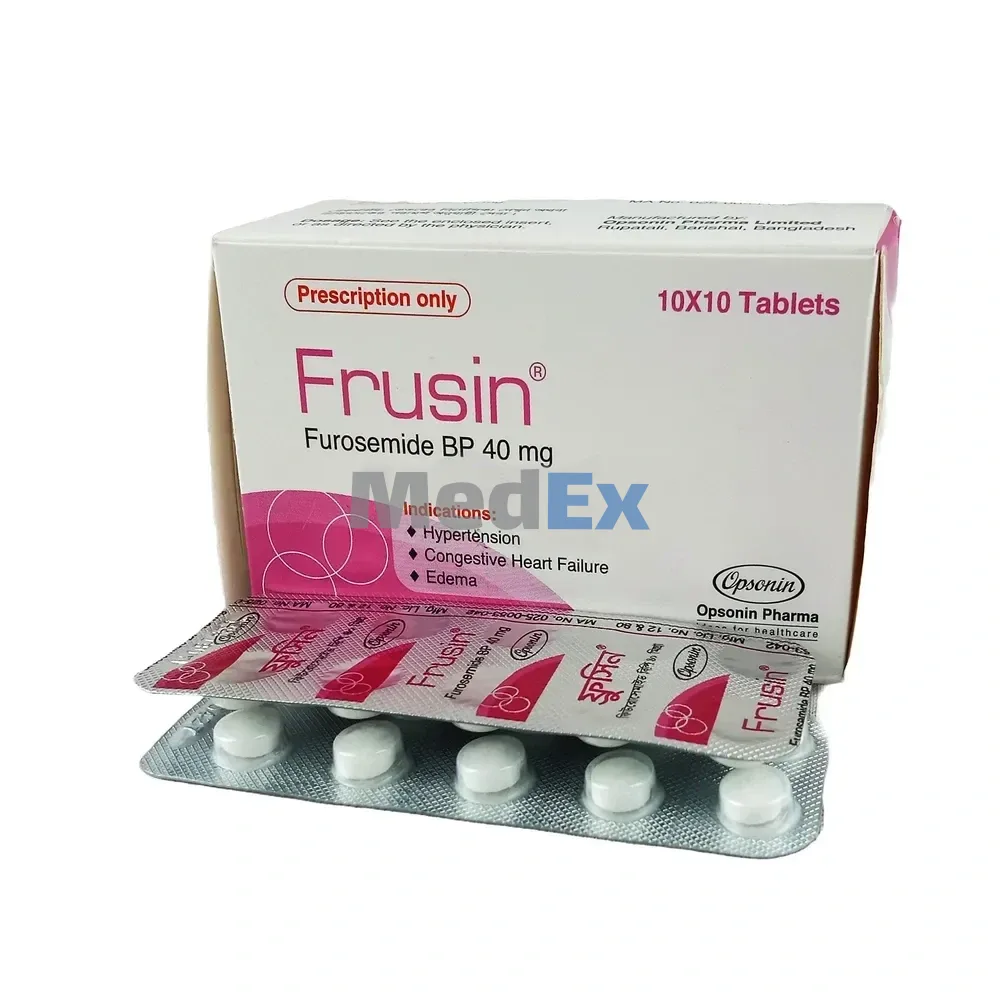 Frusin® 40 mg
Medical Disclaimer: Educational purpose only. Not a substitute for professional medical advice.
Reference Hubs:


