
Pegylated Erythropoietin: Uses, Dosage, Side Effects | MedexInfo
Pegylated Erythropoietin
Rx Only
Generic NamePegylated Erythropoietin
Therapeutic ClassErythropoiesis-Stimulating Agent (ESA)
Common Dose0.6 mcg/kg SC every 2–4 weeks
Max / 24hAs per clinical protocol
PregnancyCategory C
Indications ▼
Anemia associated with chronic kidney disease (CKD)
Anemia due to chemotherapy in cancer patients
Perioperative anemia management in selected patients
Mechanism & Pharmacokinetics ▼
Mechanism: Stimulates erythroid progenitor cells in the bone marrow, increasing red blood cell production.
Pharmacokinetics: Pegylation prolongs half-life (~2–3 weeks). Administered SC or IV; metabolized in kidneys and liver; excreted slowly. Steady-state achieved after 4–6 weeks of dosing.
Dosage & Administration ▼
| Patient Category | Recommended Dose | Max / 24h |
|---|---|---|
| Adults (CKD, non-dialysis) | 0.6 mcg/kg SC every 2–4 weeks | As per protocol |
| Adults (CKD, dialysis) | 0.6 mcg/kg SC every 2 weeks; adjust per hemoglobin response | As per protocol |
| Cancer patients on chemotherapy | 0.04 mg/kg SC once weekly | As per oncologist guidance |
| Hepatic/Renal Impairment | Adjust dose based on hemoglobin response and iron status | As per protocol |
Note: Administer SC into thigh, abdomen, or upper arm; rotate injection sites. Monitor hemoglobin and hematocrit regularly. Avoid rapid increases in hemoglobin to reduce cardiovascular risk.
Side Effects ▼
Common: Hypertension, headache, arthralgia, injection site reactions
Occasional: Fever, dizziness, nausea
Rare: Thromboembolic events, pure red cell aplasia, seizures
Contraindications ▼
Hypersensitivity to erythropoietin or any excipient
Uncontrolled hypertension
Hemoglobin above recommended target for underlying condition
Drug Interaction ▼
Concurrent ESA therapy: monitor hemoglobin closely
Iron supplementation: enhances response
Thalidomide or other pro-thrombotic agents: increased thromboembolic risk
Pregnancy & Lactation ▼
Category C; use only if potential benefit justifies risk
Excretion in breast milk unknown; monitor infant if used during lactation
Clinical / Research Summary ▼
Prolonged half-life allows less frequent dosing compared to standard erythropoietin.
Effectively increases hemoglobin levels and reduces transfusion requirements.
Careful monitoring reduces risk of cardiovascular and thromboembolic complications.
Patient Counseling Points ▼
Rotate injection sites to reduce local reactions.
Monitor blood pressure and hemoglobin regularly.
Report symptoms like chest pain, shortness of breath, or unusual bleeding immediately.
Storage & Handling ▼
Store refrigerated 2–8°C; do not freeze
Protect from light
Keep out of reach of children
Brand Names (Bangladesh & Global) ▼
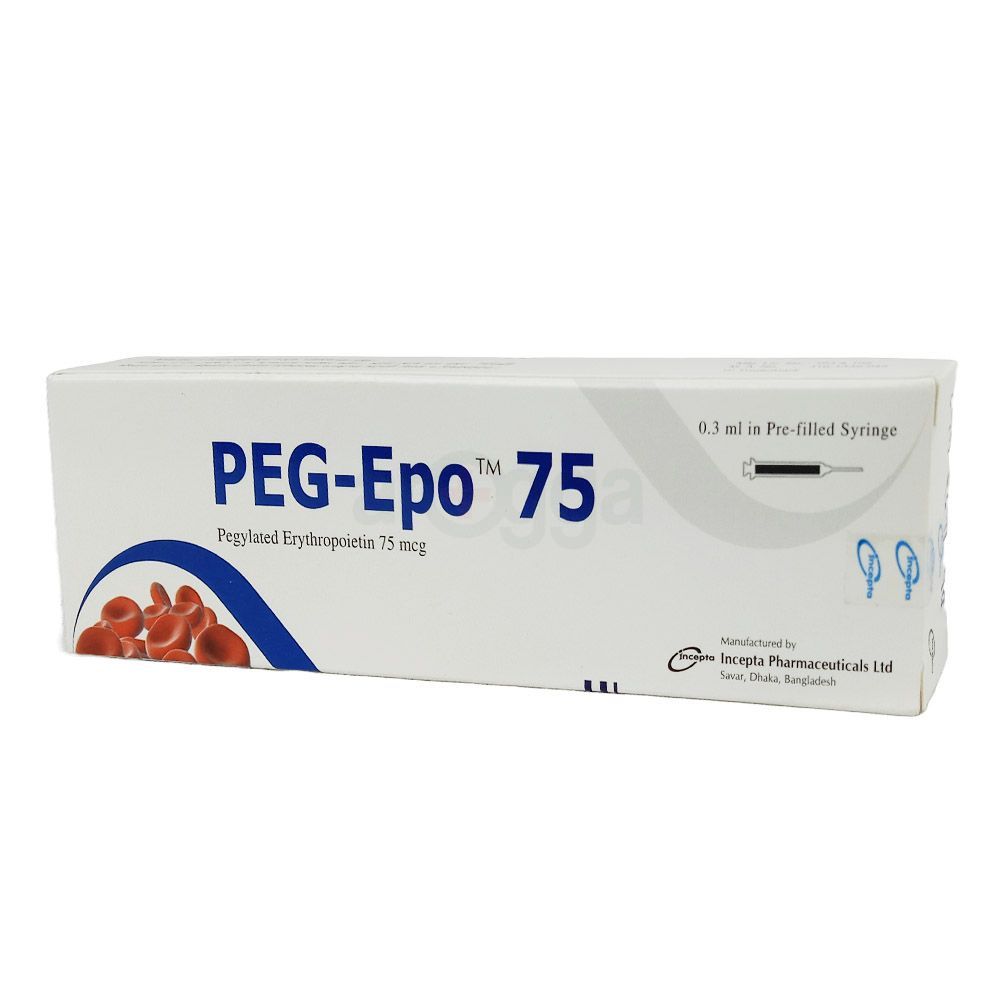 PEG‑Epo® 50 mcg/0.3 ml
Medical Disclaimer: This information is for educational purposes only and should not replace professional medical advice. Always consult a qualified healthcare provider.
Reference Hubs:


