
Ranolazine
Rx Only
Generic NameRanolazine
Therapeutic ClassAntianginal Agent
Common Dose500–1000 mg twice daily
Max / 24h2000 mg
PregnancyCategory C
Indications ▼
Chronic stable angina
Adjunct therapy when beta-blockers, calcium channel blockers, or nitrates are insufficient
Mechanism & Pharmacokinetics ▼
Mechanism: Inhibits late phase sodium current (INa) in cardiac myocytes, reducing intracellular sodium and calcium overload, improving myocardial relaxation and oxygen efficiency.
Pharmacokinetics: Well absorbed orally; peak plasma concentration in 2–5 hours; metabolized mainly via CYP3A4 and partially CYP2D6; elimination half-life ~7 hours; excreted via urine and feces.
Dosage & Administration ▼
| Patient Category | Recommended Dose | Max / 24h |
|---|---|---|
| Adults (Initial) | 500 mg twice daily | 2000 mg |
| Adults (Maintenance) | May increase to 1000 mg twice daily | 2000 mg |
| Elderly | Use cautiously; monitor renal function | 2000 mg |
| Renal / Hepatic Impairment | Use with caution; avoid in severe hepatic impairment | 2000 mg |
Note: Swallow extended-release tablets whole; do not crush or chew. Can be taken with or without food.
Side Effects ▼
Common: Dizziness, headache, constipation, nausea
Occasional: Palpitations, hypotension
Serious: QT interval prolongation
Contraindications ▼
Clinically significant hepatic impairment
Concomitant use with strong CYP3A inhibitors (e.g., ketoconazole)
Known hypersensitivity to ranolazine
Drug Interaction ▼
Strong CYP3A inhibitors increase plasma levels
CYP3A inducers reduce effectiveness
May increase plasma concentration of digoxin and simvastatin
Use cautiously with other QT-prolonging drugs
Pregnancy & Lactation ▼
Category C; use only if potential benefit justifies risk
Breastfeeding safety not established; use caution
Clinical / Research Summary ▼
Improves exercise tolerance and reduces angina frequency
Does not significantly affect heart rate or blood pressure
Useful add-on therapy in patients inadequately controlled with conventional antianginal drugs
Requires monitoring for QT prolongation risk
Patient Counseling Points ▼
Do not crush or chew extended-release tablets
Report dizziness or fainting
Avoid grapefruit products
Continue other cardiac medications as prescribed
Storage & Handling ▼
Store below 30°C
Keep away from moisture and light
Brand Names (Bangladesh & Global) ▼
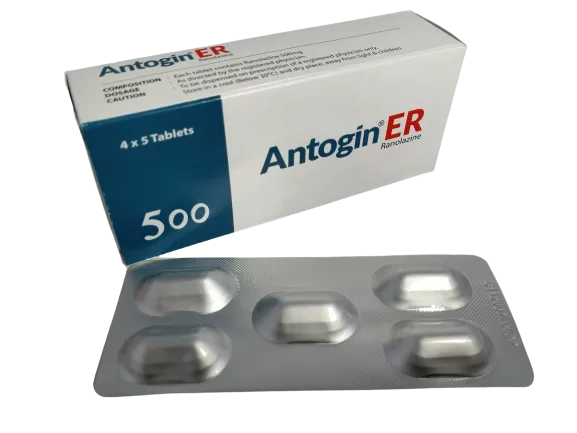 Antogin ER® 500 mg
Medical Disclaimer: This information is for educational purposes only and should not replace professional medical advice.


