
Ulipristal Acetate: Uses, Dosage, Side Effects | MedexInfo
Ulipristal Acetate
Rx
Generic NameUlipristal Acetate
Therapeutic ClassSelective Progesterone Receptor Modulator (SPRM)
Max / 24h30 mg (emergency contraception)
Common Dose30 mg single dose for emergency contraception; 5 mg daily up to 3 months for uterine fibroids
PregnancyContraindicated for emergency contraception; use only if benefit outweighs risk for fibroids
Indications ▼
Emergency contraception within 120 hours after unprotected intercourse
Management of symptomatic uterine fibroids in premenopausal women
Mechanism & Pharmacokinetics ▼
Mechanism: Acts as a selective progesterone receptor modulator; inhibits or delays ovulation for emergency contraception and reduces fibroid size by modulating progesterone-dependent pathways.
Pharmacokinetics: Rapid oral absorption; peak plasma concentration ~1–3 hours; metabolized by CYP3A4 in liver; half-life ~32 hours; excreted in feces and urine.
Dosage & Administration ▼
| Condition | Recommended Dose | Frequency |
|---|---|---|
| Emergency contraception | 30 mg | Single oral dose within 120 hours of unprotected intercourse |
| Uterine fibroids | 5 mg | Once daily for up to 3 months |
Note: Swallow tablets whole with water; for emergency contraception, the earlier the dose, the higher the efficacy.
Side Effects ▼
Headache, nausea, abdominal pain
Fatigue, dizziness
Menstrual cycle changes (delayed or irregular bleeding)
Rare: Liver enzyme elevation, allergic reactions
Contraindications ▼
Pregnancy (for emergency contraception)
Hypersensitivity to Ulipristal Acetate
Liver impairment for long-term fibroid treatment
Drug Interaction ▼
CYP3A4 inducers (e.g., rifampicin, phenytoin): may reduce efficacy
CYP3A4 inhibitors (e.g., ketoconazole): may increase plasma levels
Other hormonal contraceptives: may affect bleeding patterns
Pregnancy & Lactation ▼
Contraindicated during pregnancy for emergency contraception
Use with caution in breastfeeding; excretion in milk unknown
Clinical / Research Summary ▼
Therapeutic Role: Prevents pregnancy after unprotected intercourse; reduces uterine fibroid size and symptoms.
Clinical Effectiveness: Highly effective within 120 hours for emergency contraception; improves heavy menstrual bleeding in fibroids.
Safety Profile: Generally well tolerated; monitor liver function during long-term therapy.
Current Research: Studies evaluating repeated use for contraception and long-term effects on fibroids.
Patient Counseling Points ▼
Take exactly as prescribed; do not exceed single dose for emergency contraception
Report any severe abdominal pain, jaundice, or allergic reactions
Expect possible changes in menstrual cycle
Do not use as regular contraceptive; consider ongoing contraception after emergency use
For fibroids, adherence to full course is important for efficacy
Storage & Handling ▼
Store at 20–25°C, protect from moisture and light
Keep out of reach of children
Brand Names (Bangladesh & Global) ▼
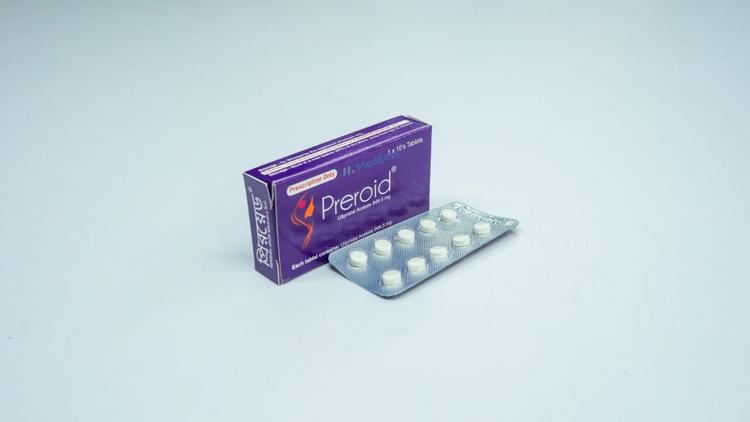 Preroid®
Medical Disclaimer: This information is intended for educational purposes only and must not replace professional medical advice.


