
Tranexamic Acid
Rx
Generic NameTranexamic Acid
Therapeutic ClassAntifibrinolytic Agent
Common Strength250 mg, 500 mg (tablet); 500 mg/5 mL (injection)
Max / 24h4 g (oral)
PregnancyUse if benefit outweighs risk
Indications ▼
Heavy menstrual bleeding (menorrhagia)
Prevention and treatment of surgical bleeding
Trauma-related hemorrhage
Bleeding disorders with hyperfibrinolysis
Hereditary angioedema (prophylaxis)
Mechanism & Pharmacokinetics ▼
Mechanism: Tranexamic acid is a synthetic lysine analogue that inhibits fibrinolysis by reversibly blocking lysine-binding sites on plasminogen, preventing its conversion to plasmin and stabilizing formed clots.
Pharmacokinetics: Well absorbed orally. Minimal metabolism. Eliminated primarily unchanged via renal excretion. Plasma half-life is approximately 2–3 hours.
Dosage & Administration ▼
| Indication | Dose | Frequency |
|---|---|---|
| Menorrhagia | 1–1.5 g | 2–3 times daily for up to 5 days |
| Postoperative / Trauma bleeding | 500 mg–1 g (IV) | Every 6–8 hours as needed |
| Hereditary angioedema | 1–1.5 g | 2–3 times daily |
Note: Dose adjustment required in renal impairment.
Side Effects ▼
Nausea, vomiting, diarrhea
Abdominal discomfort
Dizziness, headache
Visual disturbances (rare)
Rare: thromboembolic events, seizures (high-dose IV)
Contraindications ▼
Active intravascular clotting
History of thromboembolic disease
Severe renal impairment (without dose adjustment)
Subarachnoid hemorrhage
Hypersensitivity to tranexamic acid
Drug Interaction ▼
Hormonal contraceptives: increased risk of thrombosis
Other procoagulant agents: additive thrombotic risk
Thrombolytics: antagonized effect
Pregnancy & Lactation ▼
Can be used if clinically indicated
No strong evidence of teratogenicity
Excreted in breast milk in small amounts; generally considered safe
Clinical / Research Summary ▼
Clinical Role: Key antifibrinolytic used to reduce bleeding without affecting coagulation.
Evidence: Proven mortality benefit in trauma and postpartum hemorrhage when used early.
Limitation: Thrombotic risk in predisposed patients.
Monitoring: Renal function, visual symptoms, thrombotic signs.
Patient Counseling Points ▼
Take exactly as prescribed
Report visual changes or leg swelling immediately
Do not exceed recommended duration for menstrual bleeding
Inform doctor if using hormonal contraceptives
Storage & Handling ▼
Store below 30°C
Protect from light and moisture
Keep out of reach of children
Brand Names (Bangladesh & Global) ▼
Bangladesh:
 Anaxyl® 500 mg
 Anaxyl® 500 mg/5 ml Inj
Bionex® 500 mg
Block-T® 500 mg
Block-T® 500 mg/5 ml Inj
Enclot® 250 mg
Enclot® 500 mg
Enclot® 500 mg/5 ml Inj
Fibrino® 500 mg
Fibrino® 500 mg/5 ml Inj
Fibrostat® 500 mg/5 ml Inj
Frabex® 500 mg
Hemostop® 500 mg
Hemotrax® 500 mg
Hemotrax® 500 mg/5 ml Inj
Intrax® 500 mg
Intrax® 500 mg/5 ml Inj
Nexyl® 500 mg
Oranex® 500 mg
Taxiclot® 500 mg
Texamic® 500 mg
Tracid® 500 mg
Tracid® 500 mg/5 ml Inj
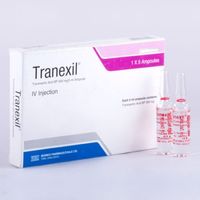
Tranexil® 500 mg
Tranexil® 500 mg/5 ml Inj
Trapic® 500 mg
Traxyl® 500 mg
Traxyl® 500 mg/5 ml Inj
Trexam® 500 mg
Xamic® 500 mg
Xamic® 500 mg/5 ml Inj
Global:
Anaxyl® 500 mg/5 ml Inj
Bionex® 500 mg
Block-T® 500 mg
Block-T® 500 mg/5 ml Inj
Enclot® 250 mg
Enclot® 500 mg
Enclot® 500 mg/5 ml Inj
Fibrino® 500 mg
Fibrino® 500 mg/5 ml Inj
Fibrostat® 500 mg/5 ml Inj
Frabex® 500 mg
Hemostop® 500 mg
Hemotrax® 500 mg
Hemotrax® 500 mg/5 ml Inj
Intrax® 500 mg
Intrax® 500 mg/5 ml Inj
Nexyl® 500 mg
Oranex® 500 mg
Taxiclot® 500 mg
Texamic® 500 mg
Tracid® 500 mg
Tracid® 500 mg/5 ml Inj
Tranexil® 500 mg
Tranexil® 500 mg/5 ml Inj
Trapic® 500 mg
Traxyl® 500 mg
Traxyl® 500 mg/5 ml Inj
Trexam® 500 mg
Xamic® 500 mg
Xamic® 500 mg/5 ml Inj
Global:
Anaxyl® 500 mg
Medical Disclaimer: For educational purposes only. Not a substitute for professional medical advice.
Reference Hubs:


